Skip to content

Platform

A hosted authority runtime for autonomous agents.

The Intended platform is a hosted authority runtime backed by Large Intent Models, the Open Intent Layer taxonomy, and the Enterprise Capability Engine. Agents send intents to the Intended API. The runtime interprets, classifies, maps to your capability model, evaluates policy and risk, and — for approved actions — issues a signed Authority Decision Token. Every decision is recorded in a tamper-evident audit chain. Downstream systems verify the token before executing. No Token, No Action.

One interface. Two implementations.

The Intended governance contract: open source and hosted platformThe Intended platform is structured around a single governance contract implemented two ways. The open source path uses IntendedOps (a self-hosted governed back-office operating system) and the Open Intent Layer (a vendor-neutral taxonomy for AI agent actions), both Apache 2.0. The hosted platform path implements the same governance contract with Large Intent Models, Open Intent Layer classification, the Enterprise Capability Engine, and a policy and risk engine. Approved actions receive a signed Authority Decision Token. Agents submit intent to either implementation; downstream systems verify the token and execute. The two paths are source-compatible, so moving from the open source path to the hosted platform requires a single config-field change.THE GOVERNANCE CONTRACTone interface · two implementationsOPEN SOURCE · APACHE 2.0IntendedOpsGoverned back-office operating systempolicy · audit · approvals · adapters · operator consoleOpen Intent LayerCanonical taxonomy for AI agent actions29 domains · 173 categories · stable OIL- identifiersnative governance · in-process audit · clone and rungithub.com/intended-soPROVIDER UPGRADE'native' → 'intended'one config fieldno rewriteHOSTED PLATFORM · api.intended.soLarge Intent ModelinterpretsOpen Intent LayerclassifiesEnterprise CapabilitymapsPolicy + Risk Engineevaluates · escalatesissuesAuthority Decision TokenRS256 · 300s TTL · single-use noncehash-chained audit · evidence export · compliance crosswalksAGENTS SUBMIT INTENT →→ DOWNSTREAM SYSTEMS VERIFY AND EXECUTENo Token, No Action
Intended open-sources the governed operating model (IntendedOps) and the intent taxonomy (Open Intent Layer) so you can run serious governance on your own infrastructure. When you need cryptographic authority tokens, Large Intent Model–backed classification, and externally verifiable evidence, point the same governance contract at the Intended platform — no rewrite.

The operator surface

Every decision in one reviewable queue.

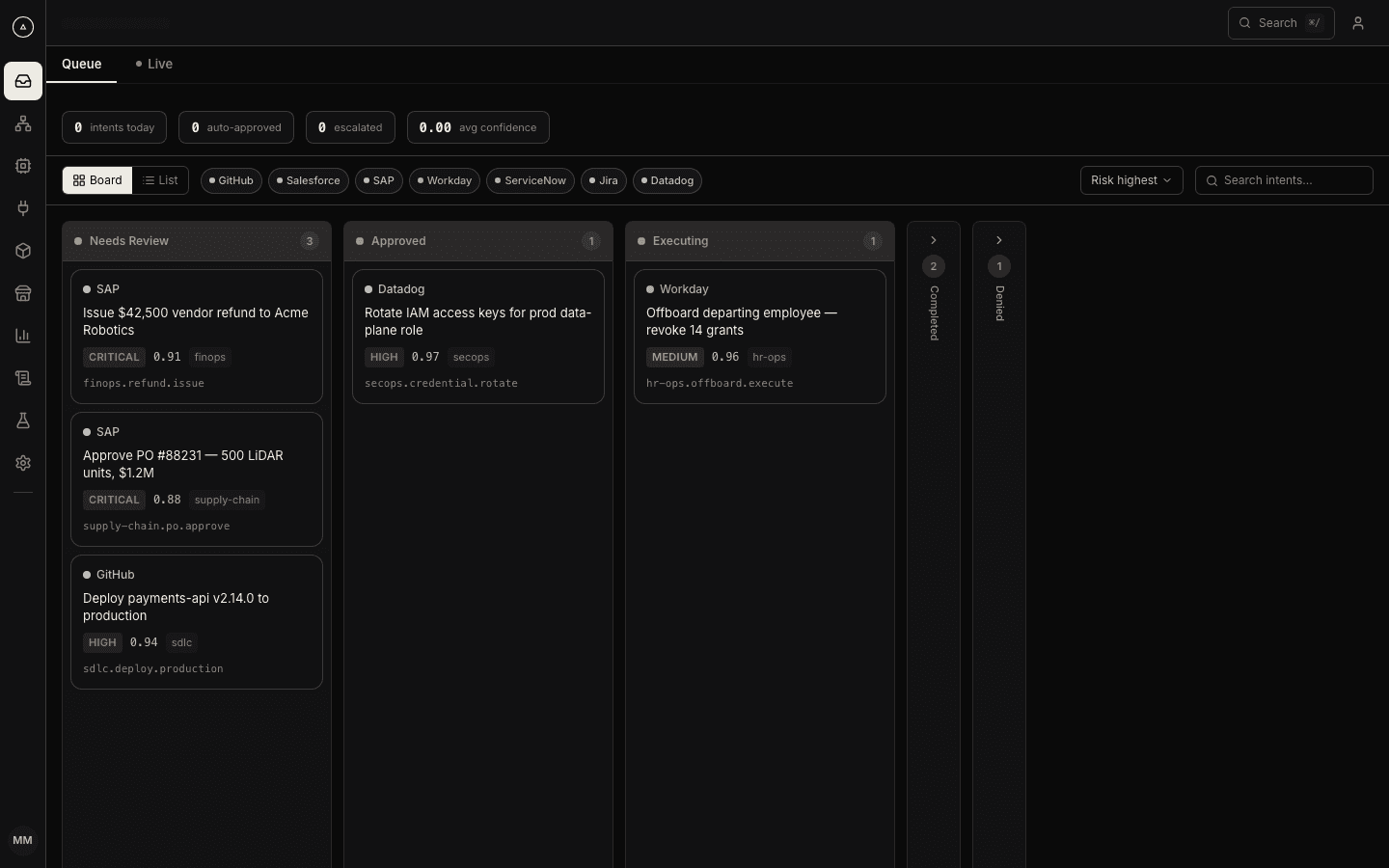
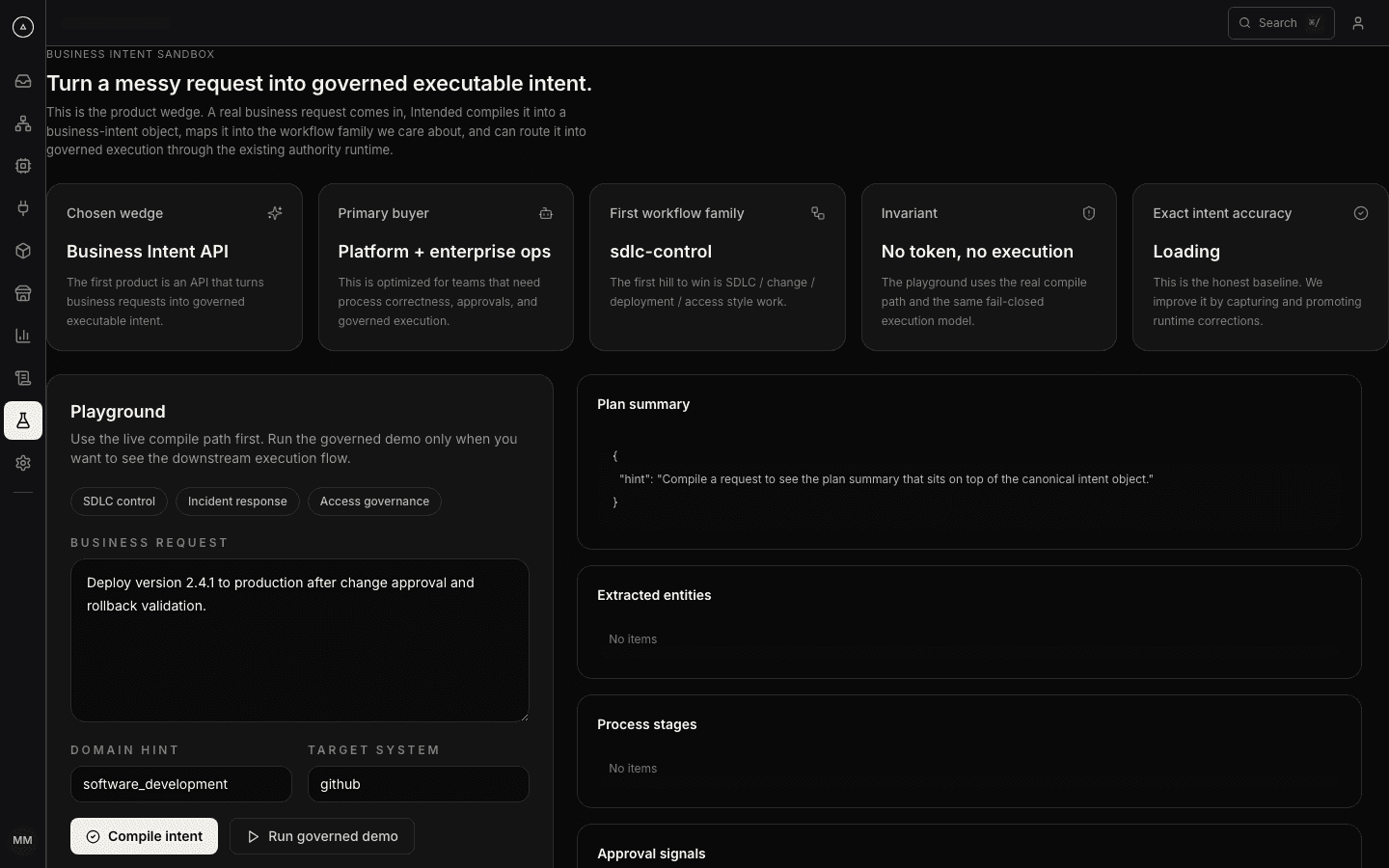
Operators land on a single decision queue that groups intents by state — needs review, approved, executing — with risk, confidence, and governed runtime context on every card. High-impact actions escalate to the right reviewer with full evidence attached.

Intended operator console — decision queue grouped by state with risk scores, confidence, and runtime context on each intent card

How the platform works

From raw action to verified execution.

1

Define and interpret intent

Open Intent Layer classification and Large Intent Model interpretation make the action legible.

2

Structure and verify

The Intent Object is checked by the Enterprise Capability Engine against capability context.

3

Decide

The Authority Engine returns ALLOW, DENY, or ESCALATE using verified intent and policy.

4

Grant authority

Approved actions receive a cryptographic Authority Token with scope, TTL, and single-use semantics.

5

Execute and prove

Execution validates the token at the boundary and the result is recorded in the immutable audit chain.

Capabilities

Everything required to evaluate the system seriously.

Open Intent Layer

The shared, open language for defining what agent actions are intended to do across tools, runtimes, and enterprise systems.

Large Intent Model

Interprets the action in context so the platform understands what the agent means, not just what it called.

Intent Object

Structures intent into the representation that verification, replay, escalation, and audit all work from.

Enterprise Capability Engine

Verifies the Intent Object against enterprise capability boundaries and operational context.

Authority Engine

Evaluates policy against verified intent and returns ALLOW, DENY, or ESCALATE with a clear decision path.

Authority Tokens

Cryptographic proof that an action was verified as intended and is authorized to execute.

Escalation workflows

Route high-risk actions to the right approver with context, evidence, and attributable approval records.

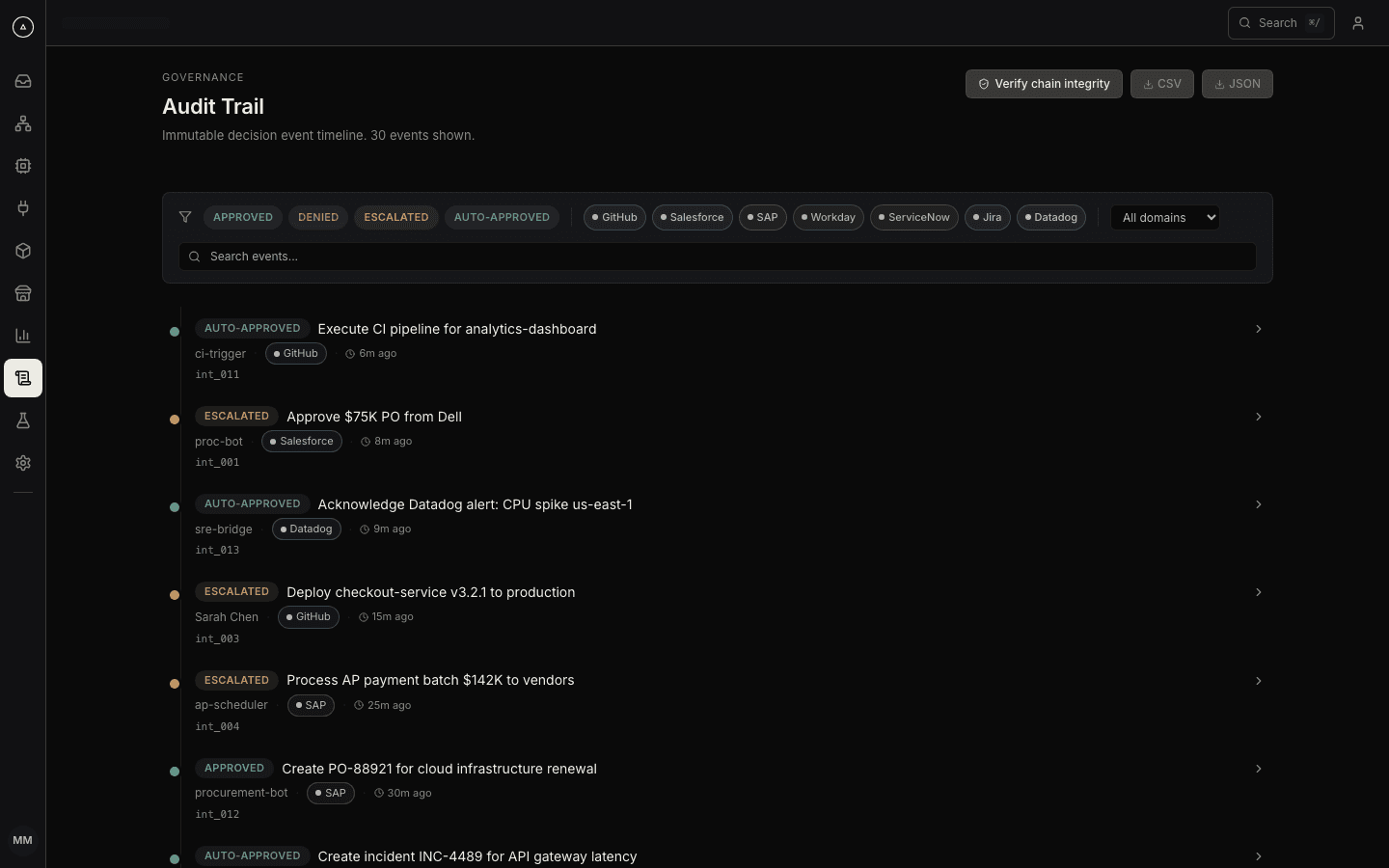
Audit evidence

Replay decisions, export bundles, and independently verify what happened after execution.

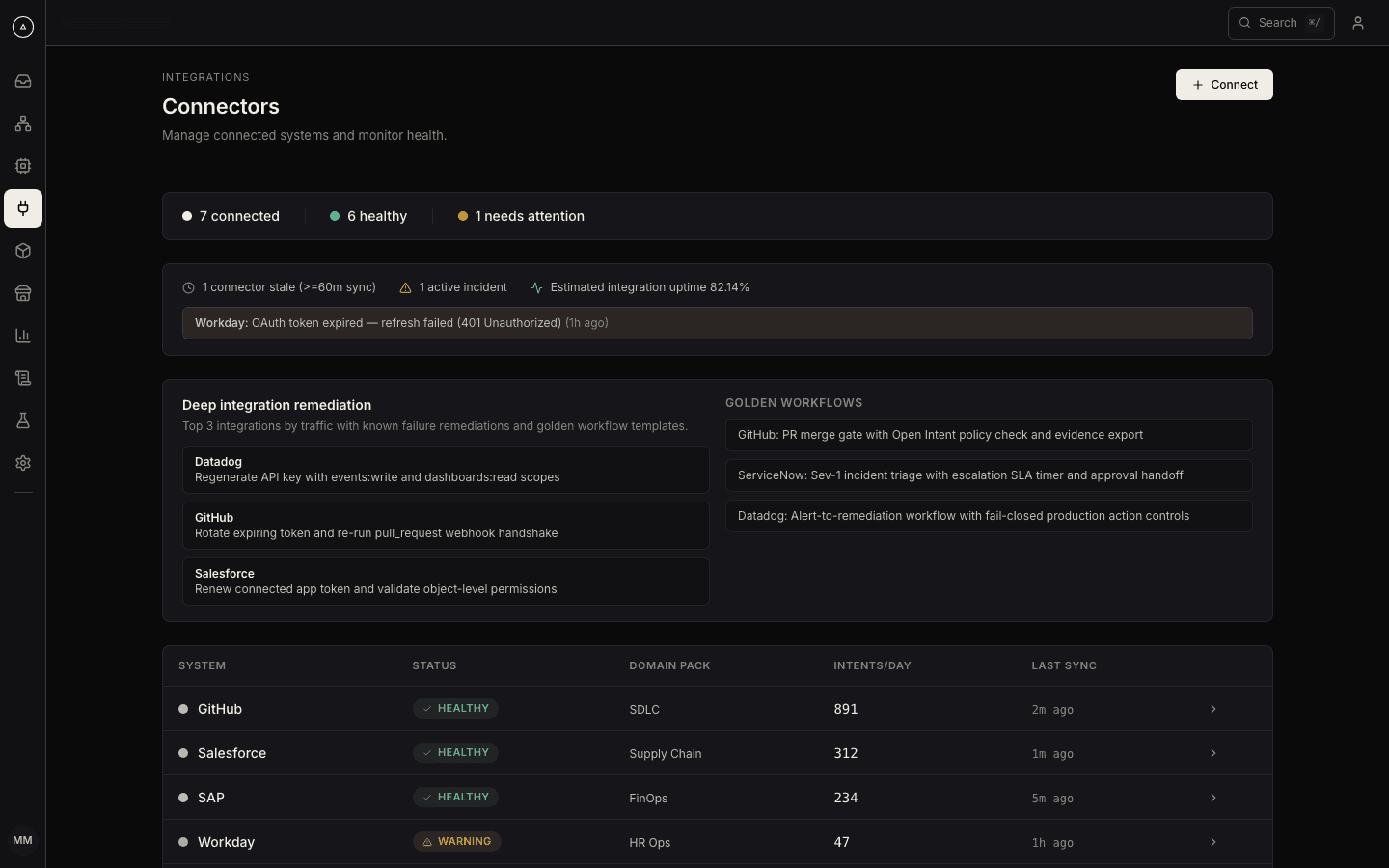
Connector ecosystem

Apply the same verification model across MCP gateways, engineering systems, enterprise apps, and internal automations.

Latency for production paths

Decision latency is built for real systems, not batch-only governance reviews.

Evidence for security and audit

Every decision can be replayed and every authorized action can be tied back to cryptographic proof.

Rule

No Token, No Action.

The platform is only credible if enforcement is real. Authority Tokens make the boundary enforceable. Audit makes it provable.

Platform | Intended