Platform · the authority layer
The runtime that decides what your agents can do.
Every action an autonomous agent attempts passes through one surface. Intent is compiled. Conformance is scored. Authority is decided. A cryptographic token is issued — or refused. Every step is preserved as evidence.
See it
02 · Architecture
Authority is decided once, then carried.
A single authority decision flows through every downstream connector. The connector doesn’t re-decide — it verifies the token presented to it. No tokens, no execution. Decisions are made once; verification happens at the gate.
03 · Components
Four named systems, one operator surface.
Each component is independent, documented, and observable. You can adopt them separately — Intent Layer alone for classification, Authority Engine alone for decision-making — or operate the full stack as one runtime.
Large Intent Model
Compiles natural language into typed IntentRequest objects. Confidence-scored, multi-hypothesis. Backed by the Open Intent taxonomy.
Read more →Authority Tokens
Ed25519-signed, single-use, TTL-bounded tokens. Issued only when policy, risk, and conformance all permit. Verified at the connector.
Explore Authority Tokens →Fail-Closed Enforcement
Verification happens in the target system itself. If anything about the token is wrong, the action is refused there — not flagged after.
Connector list →Immutable Evidence
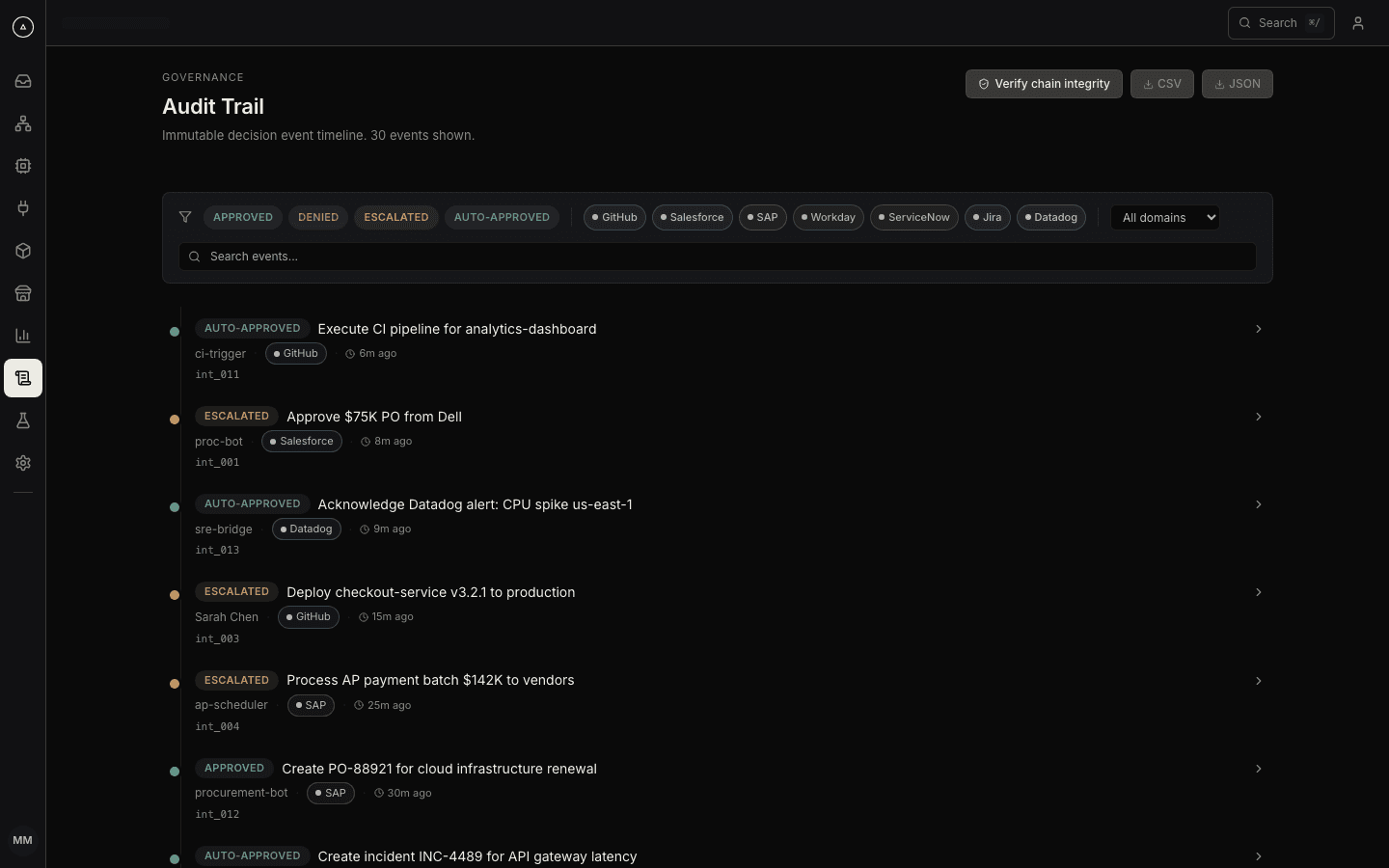
Every decision is sealed and hash-linked to the prior. Replay any decision; reconstruct any reasoning. Compliance-grade by design.
Chain specification →04 · Trust posture
Failure modes are designed in, not bolted on.
When the policy is unclear, the runtime fails closed. When LIM confidence drops below the operator-set threshold, the decision escalates. When a token is presented past its TTL, the connector refuses it. When the audit chain head is unreachable, no new decisions are issued. Each failure is observable and named.
No silent allow paths. No “default open” fallbacks. No undocumented bypass. The contract is: no token, no action.
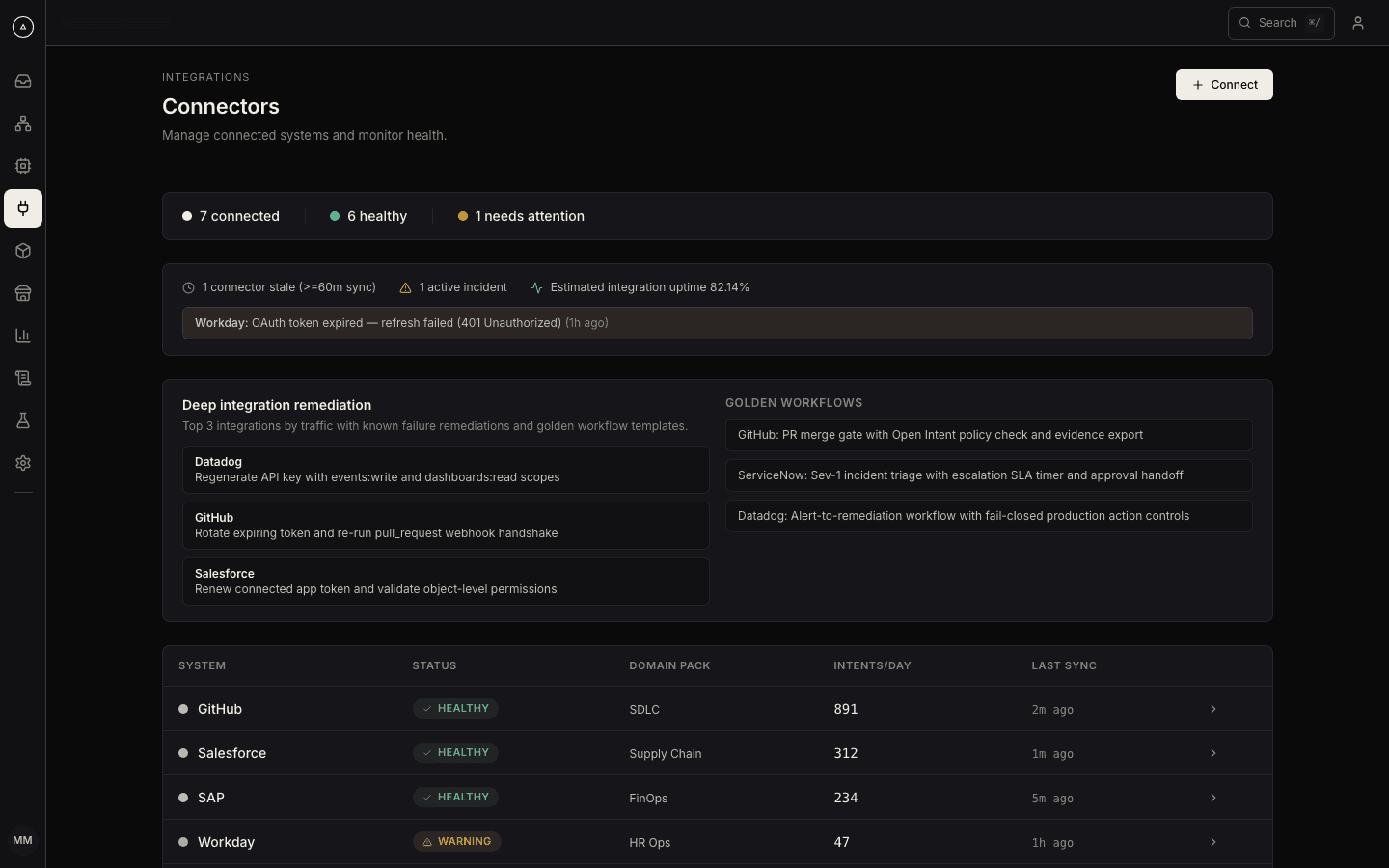
05 · Integrations
Where the runtime gates today.
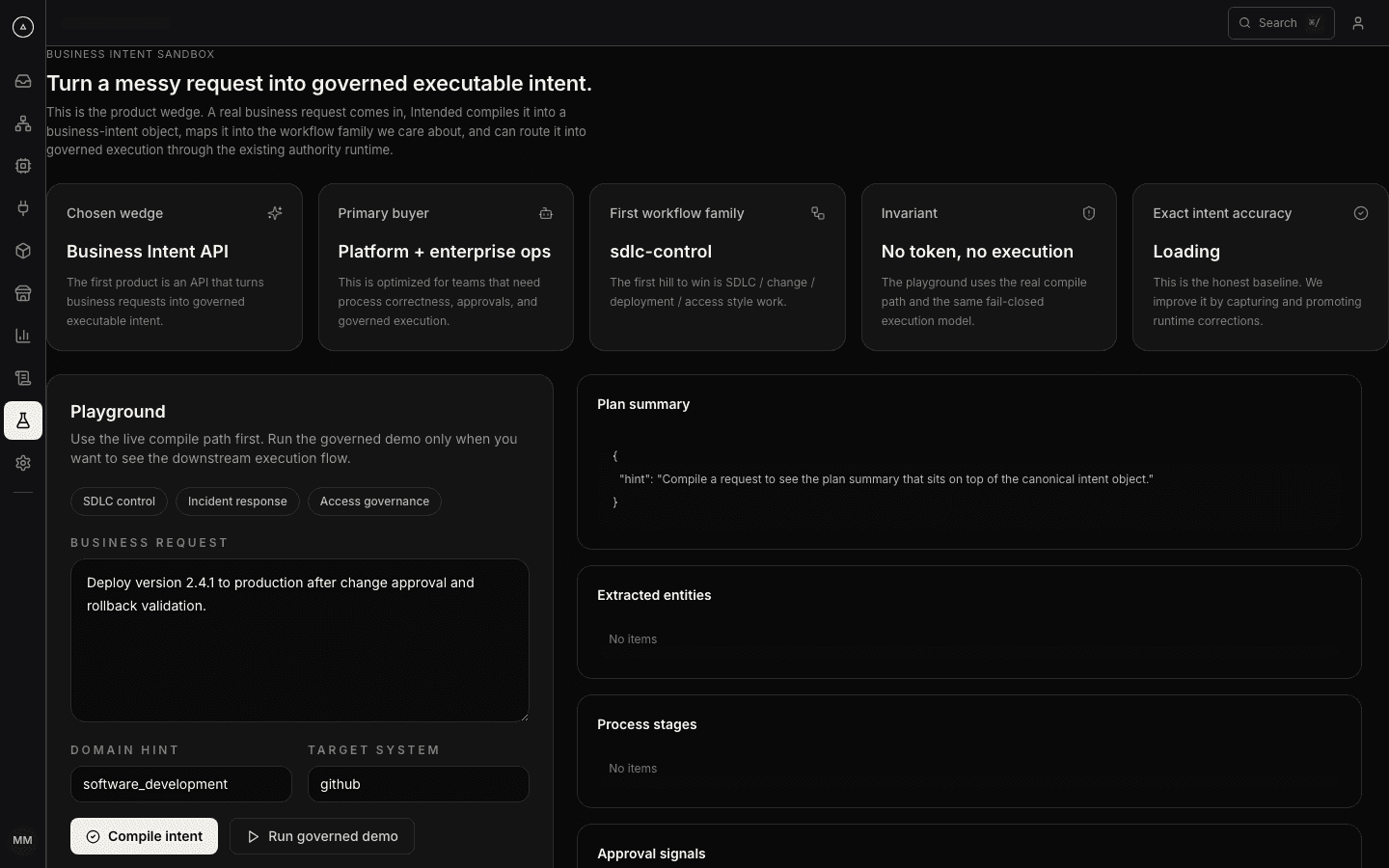
06 · Inside the console
Every agent action, reviewed before it runs.
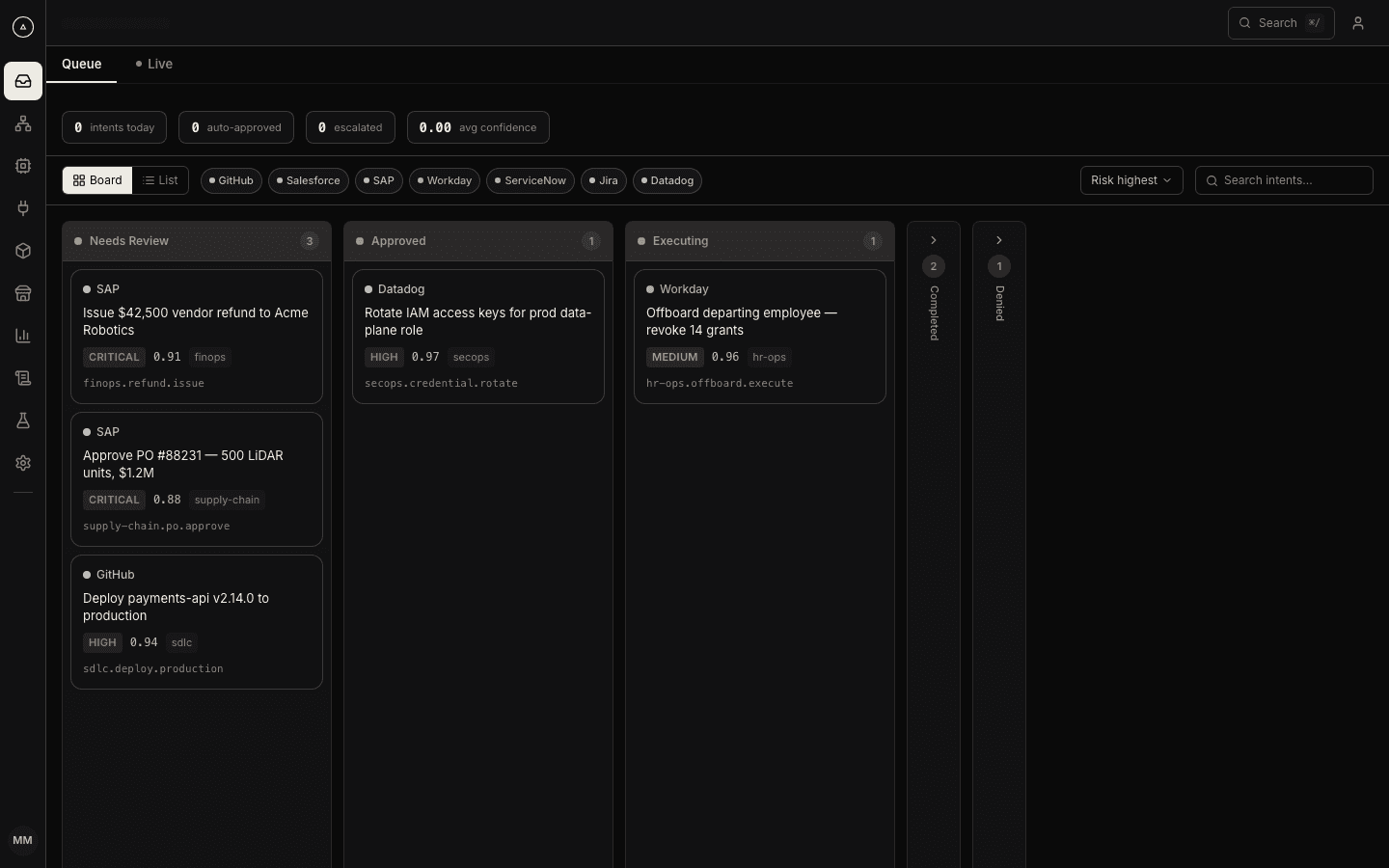
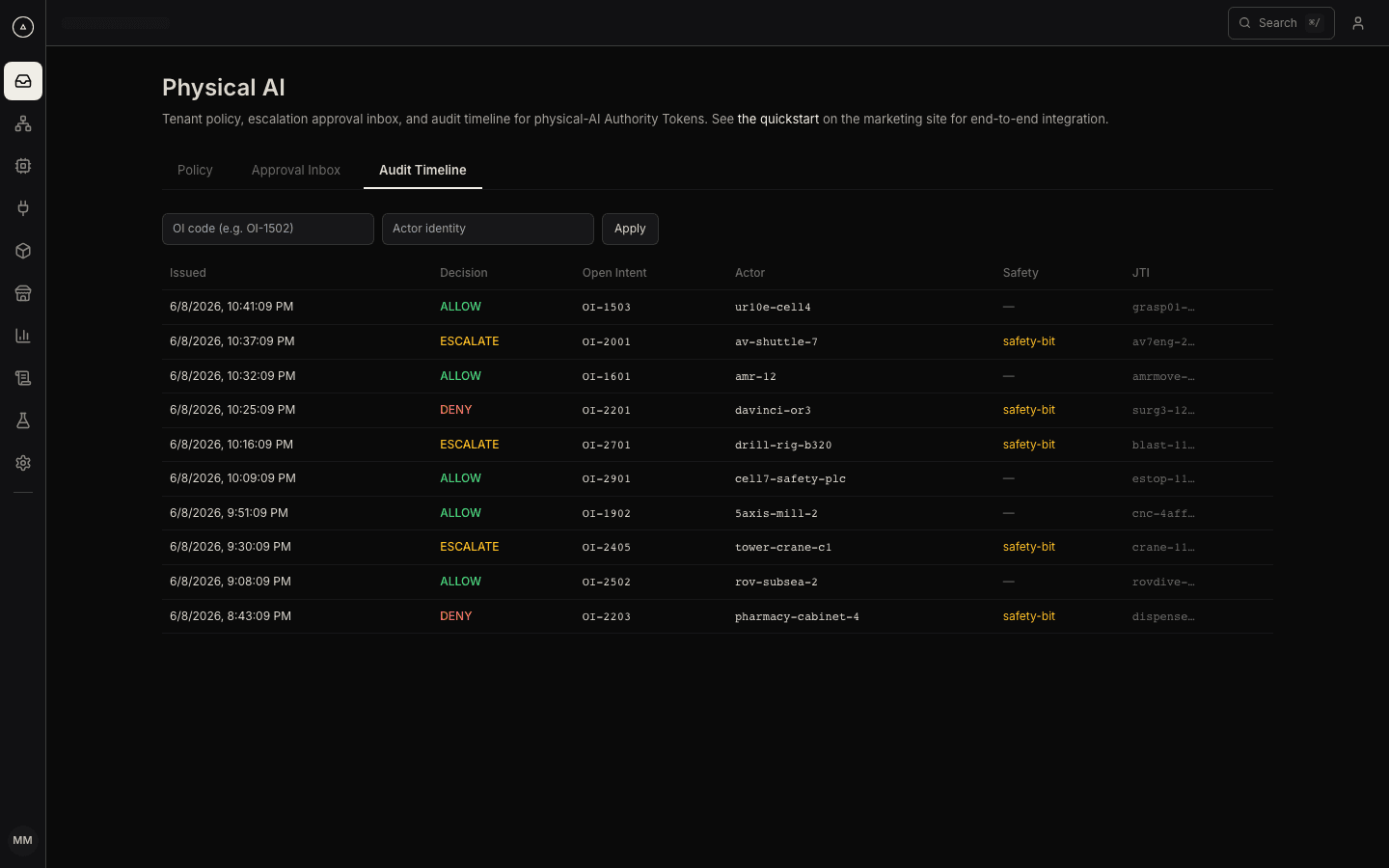
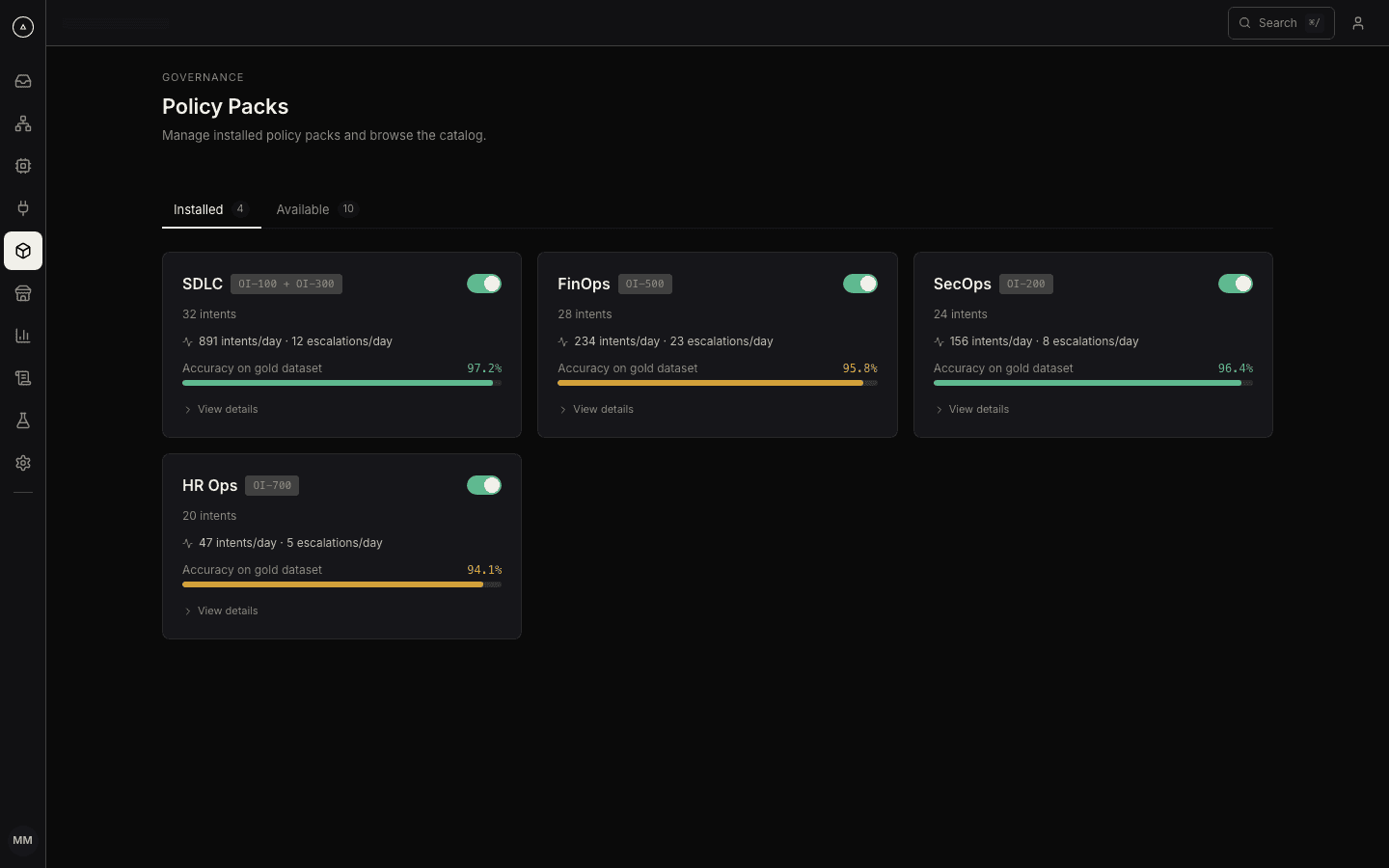
The operator console is where intents land, get scored against policy, and are approved, escalated, or denied — every decision written to an immutable audit chain you can verify.
07 · What’s next
See it run in slow time.
The how-it-works page is a long-scroll ceremony in which one Authority Token is constructed in front of you, signed in your browser, and handed to you to keep. ~90 seconds of slow time to witness what the engine is designed to do in the blink of an eye.